
Specifying materials for island and marine projects.
Salt, humidity, UV and the last barge. A coastal tropical site punishes materials chosen with temperate habits, and the logistics chain punishes incomplete shipments even harder. This guide covers what changes when your project site is an island.
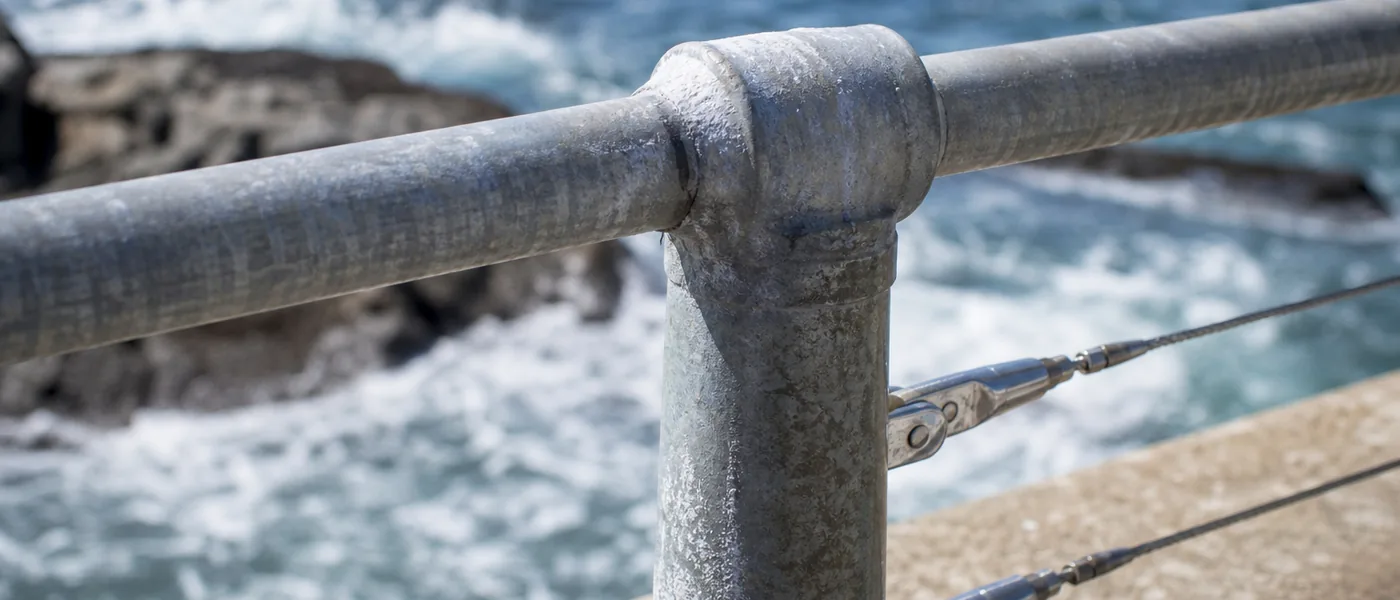
The environment stacks its stresses.
A marine tropical site combines conditions that each degrade materials on their own and compound one another in practice. Buildings specified with mainland assumptions commonly show visible corrosion, coating failure and spalling within five to ten years of handover.
The specification answer is not exotic products. It is ordinary products in the correct grades, coatings and details, verified before release.
- Salt spray attacks steel reinforcement and degrades exposed metalwork.
- Humidity above 70 percent drives condensation corrosion, mould and paint failure.
- Intense UV fades finishes, embrittles plastics and breaks down sealants.
- Temperature cycling works joints and coatings through daily expansion and contraction.
- Wind loading and driven rain test every fixing and penetration detail.
Protect the steel or replace it early.
Corrosion in marine climates is driven by humidity and salt working together, and it does not spare sheltered members: night-time cooling condenses moisture onto steel inside enclosed spaces, so ventilation is part of the corrosion strategy, not an afterthought.
- Hot-dip galvanizing for structural and secondary steelwork, with coating mass matched to exposure.
- Marine-grade stainless steel, typically grade 316, for exposed fixings, hardware and balustrade metalwork.
- Galvanized or stainless fasteners throughout. A carbon-steel bolt in a stainless assembly is the first failure point.
- Surface preparation decides coating life: abrasive blasting to the specified cleanliness before priming.
- Multi-coat paint systems with zinc-rich primers where galvanizing is impractical.
Detail against chlorides and sunlight.
Chloride attack on reinforcement is the classic coastal concrete failure, and UV is the quiet killer of everything polymer-based. Both are specification problems before they are maintenance problems.
- Increased concrete cover to reinforcement, with sealers where exposure is severe.
- Stainless or coated rebar for the most exposed high-consequence elements.
- UV-stabilised formulations for WPC, membranes, gaskets and external sealants.
- Ventilated cavities, vapour barriers and treated timber against humidity-driven rot and mould.
- Finish samples approved against the real light and salt conditions they will live in.
The last barge is part of the spec.
Island cargo rarely travels door to door. Ocean freight arrives at a hub port, then transfers to shallow-draft vessels or barges for reef-locked lagoons, and on many islands it is carried ashore by hand because there is no dock or crane. Monsoon seasons close weather windows and reshuffle schedules.
This changes procurement priorities: a complete, well-packed consolidated shipment beats a marginally cheaper incomplete one, because a missed item can wait weeks for the next vessel rotation.
- Export packing specified for trans-shipment and manual beach handling, not just container transit.
- Complete-kit consolidation: fixings, adhesives, trims and spares shipped with the primary materials.
- Delivery programmes planned around seasonal weather windows, not ideal calendars.
- Marking and packing lists that let an island crew find any item without opening every crate.
- Critical spares included in the first shipment for anything that stops the works if damaged.
- Confirm the exposure class and specify coatings, grades and cover to match it.
- Upgrade every exposed fixing to marine-grade stainless or hot-dip galvanized.
- Ask for the corrosion-protection system in writing: preparation standard, coating type, thickness.
- Check UV stability on every polymer, membrane and sealant datasheet.
- Specify export packing for the whole journey, including the last leg.
- Consolidate to complete kits and include installation consumables.
- Plan deliveries around the destination's weather windows.
- Verify warranty behaviour in marine environments before release, not after failure.